HOW I ACCIDENTALLY BECAME A PUB LANDLADY
Nobody grows up in Canada thinking:
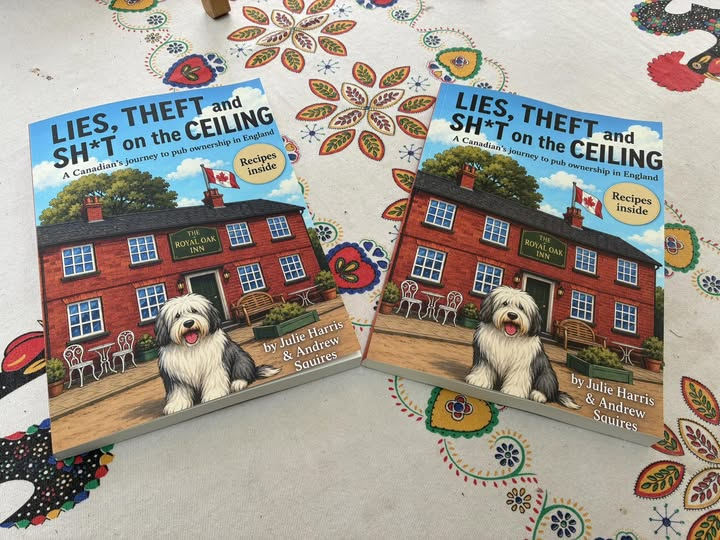
“You know what my future holds? A collapsing English pub, a screaming dishwasher, forty-seven drunk villagers arguing about cricket, and a giant sheepdog stealing Yorkshire puddings.”
And yet…
here we are.
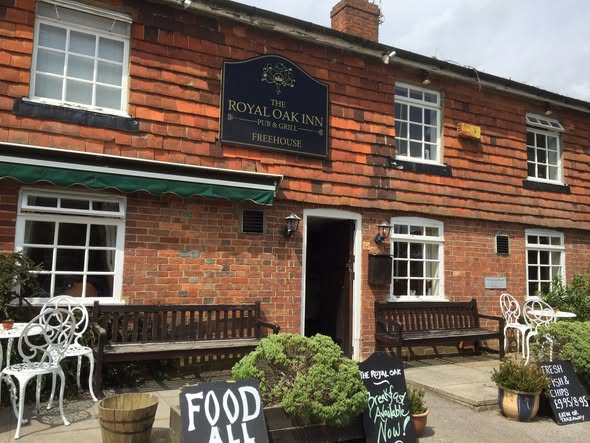
If you’d told younger me that one day I’d be running an English pub in a tiny village where people communicate almost exclusively through passive aggression and cryptic weather observations, I’d have laughed directly into your face.
At the beginning, I thought pubs were basically restaurants with carpets.
I was catastrophically wrong.
An English pub is not a business.
It’s an ecosystem.
Part community centre.
Part therapy office.
Part marriage guidance service.
Part United Nations summit with more lager and occasional shouting.
People don’t just come to the pub for food or drink.
They come to announce divorces.
Celebrate births.
Mourn deaths.
Start fights over parking.
Discuss parish council drama like it’s international espionage.
And God help you if you accidentally sit in someone’s “usual seat.”
I learned this very early on.
One afternoon, a lovely old boy walked in, stared at a stranger occupying his stool, and just stood there silently holding his pint money like a disappointed Victorian ghost.
No confrontation.
No words.
Just a level of visible emotional devastation usually reserved for war documentaries.
The poor tourist eventually moved after sensing he’d somehow committed a cultural hate crime.
Then there was the concept of “rounds.”
Now, in Canada, people buy drinks normally.
Like civilised people.
In Britain, one person buys eighteen drinks, forgets entirely whose turn it is, and by midnight everyone is operating on a complex accounting system based entirely on trust, resentment, and vibes.
I spent the first six months in a state of complete panic trying to understand who owed what.
At one point I accidentally skipped Dave during rounds and thought I’d caused an international incident.
The man looked at me like I’d insulted his ancestors.
And then came Sunday roasts.
Sweet Jesus.
I thought I knew roast dinners.
I did not.
An English Sunday roast is less a meal and more a sacred religious ceremony involving gravy floods, territorial behaviour over crispy potatoes, and at least one person dramatically claiming:
“It’s not as good as my mother’s.”
Nobody’s mother has ever been identified.
But apparently she was the greatest chef who ever lived.
The pub itself was chaos from day one.
The dishwasher screamed like it was being exorcised.
The cellar flooded whenever it rained.
One chef disappeared mid-shift and was later found asleep behind the bins.
The karaoke machine nearly caused a divorce.
Twice.
And somehow, despite all this, I fell hopelessly in love with the place.
Because pubs aren’t really about beer.
They’re about people.
The lonely widower who only speaks properly once he’s had half a bitter.
The exhausted nurse eating chips at the bar after a brutal shift.
The farmers covered in mud.
The old couples sharing puddings.
The locals who would absolutely kill each other during parish meetings but still show up to help if your pipes burst at 2am.
And somewhere in the middle of all this madness was me:
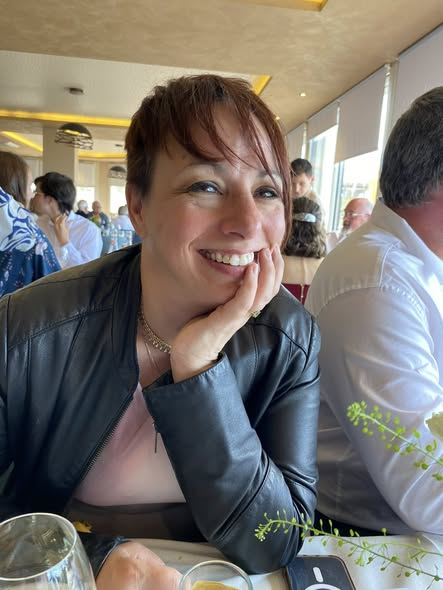
A Canadian woman trying to survive village life while covered in gravy stains and fryer burns.
Honestly?
I still don’t fully understand how it happened.
One minute I was living a relatively normal existence.
The next I was arguing with beer delivery drivers, learning how to calm drunk rugby players, and yelling:
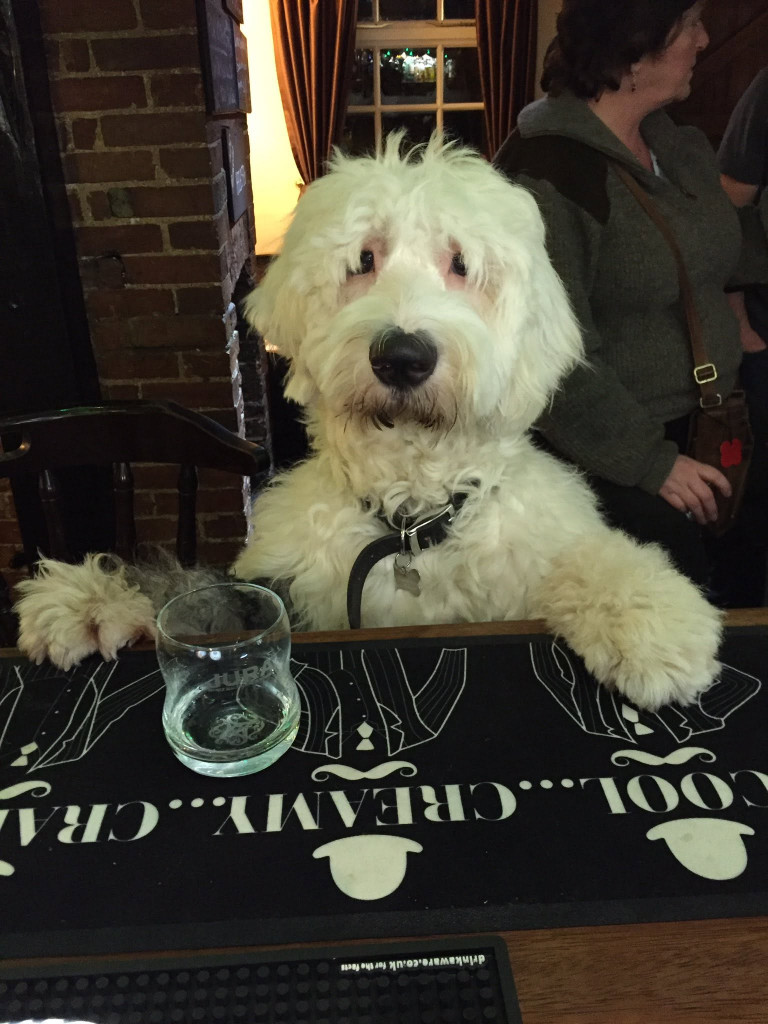
“JUNO DROP THE SAUSAGE RIGHT NOW”
across a packed dining room.
But maybe that’s the thing about pubs.
You don’t really choose them.
They absorb you slowly.
One regular at a time.
One chaotic Friday night at a time.
One slightly sticky pint glass at a time.
Until one day you realise…
You’re not just serving the village anymore.
You’ve somehow become part of it.