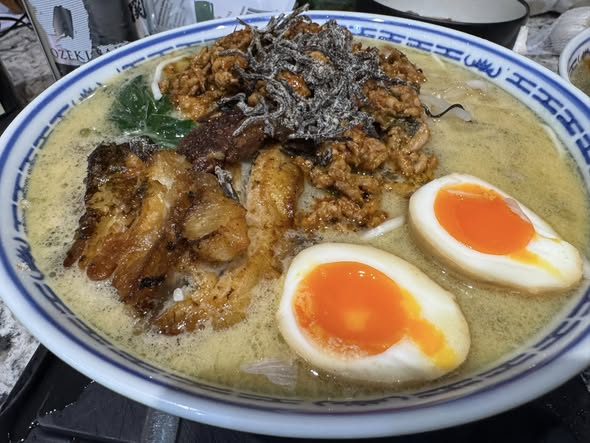
Gravy stains and tall tales await you!
Embark on a real foodie journey with Julie Harris
Welcome to Gravy stains and tall tales: A real foodie journey, where every dish comes with a story, and every stain has a memory. This blog isn’t about perfectly plated food or spotless kitchens – it’s about the messes we make, the laughter that echoes around the dinner table, and the unforgettable meals that leave a mark long after the plates are cleared.
From pub grub to family recipes passed down through generations, we’ll explore the real, unpolished side of food – the mishaps, the triumphs, and the tall tales that make every bite worth savouring. Pull up a chair and dig in!
Explore
The blog…
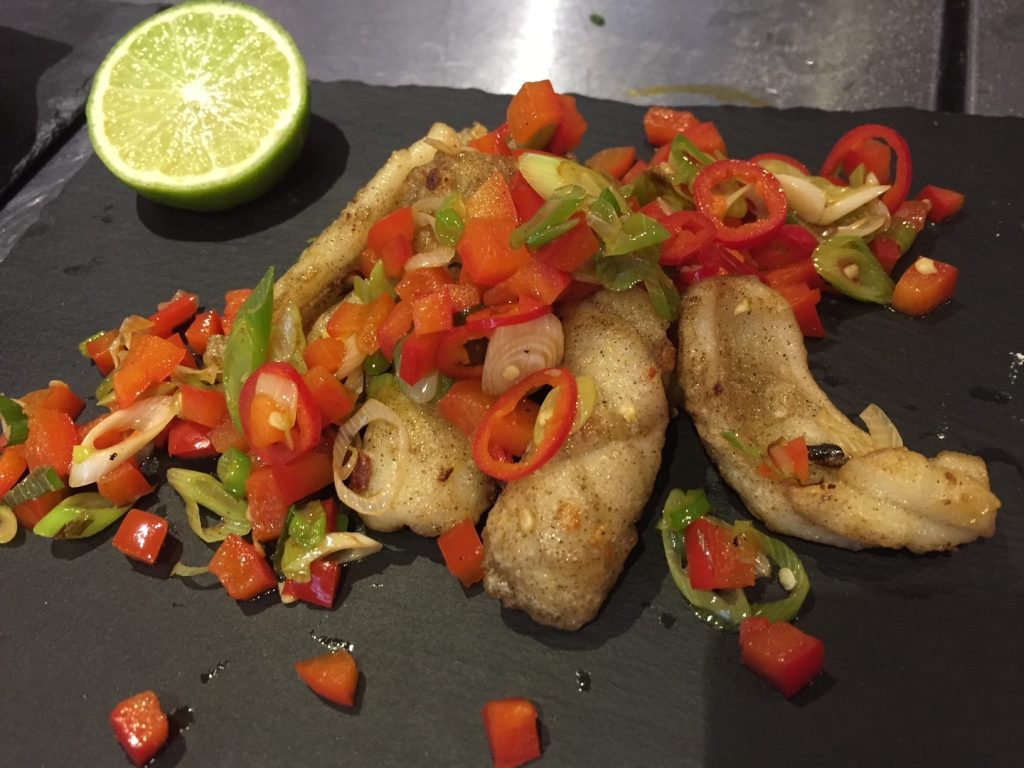
Dive into delightful recipes that blend Canadian heritage with British flair! Julie’s creations promise to tantalize your taste buds and spark joy in your kitchen.
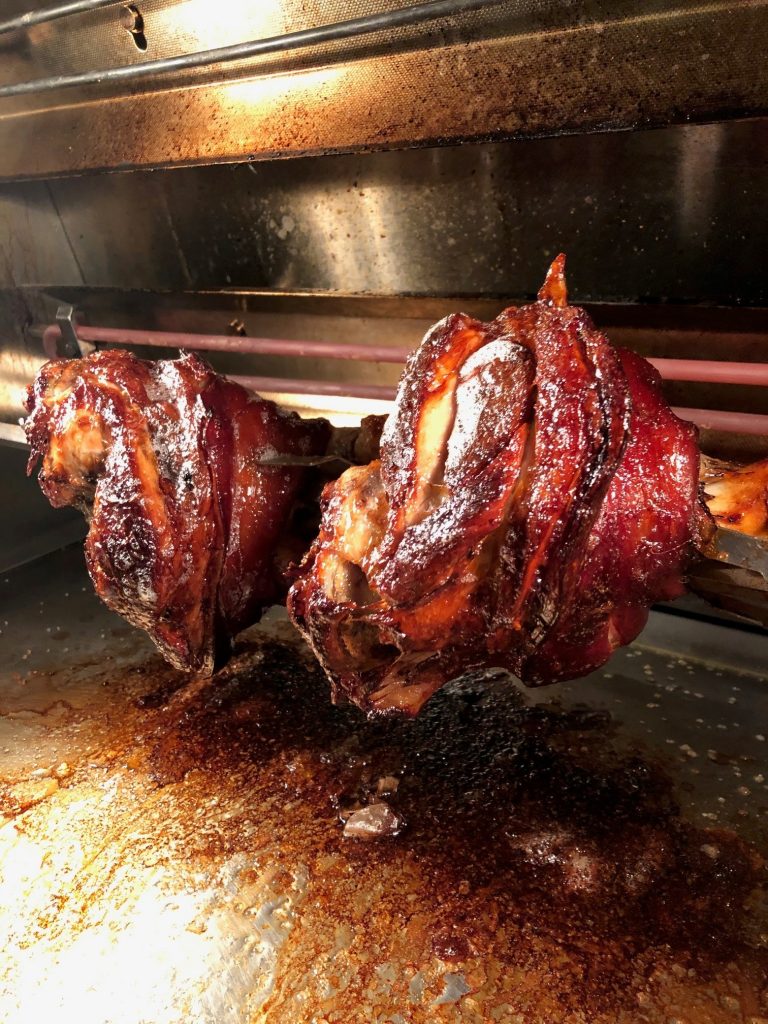
The book…
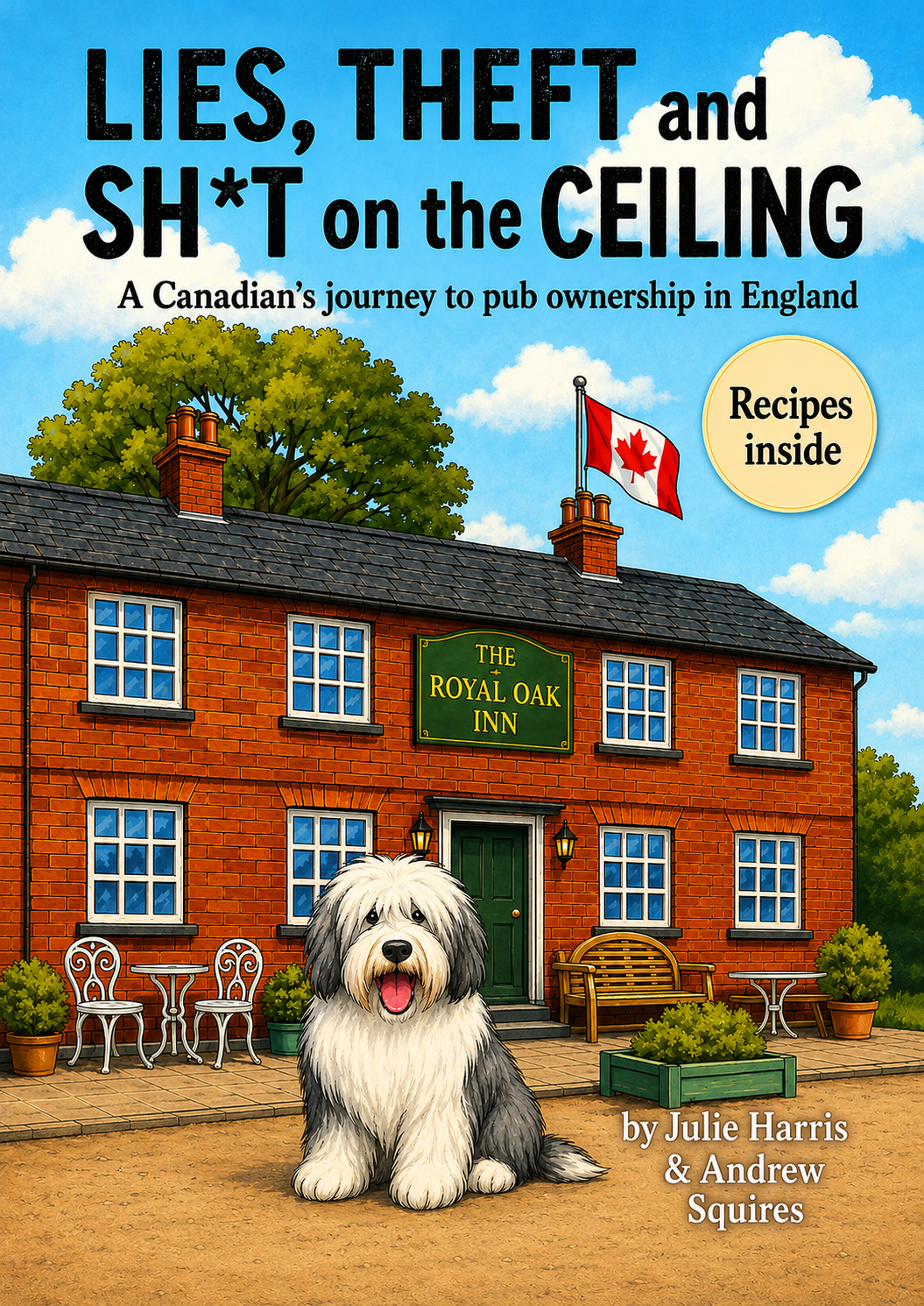
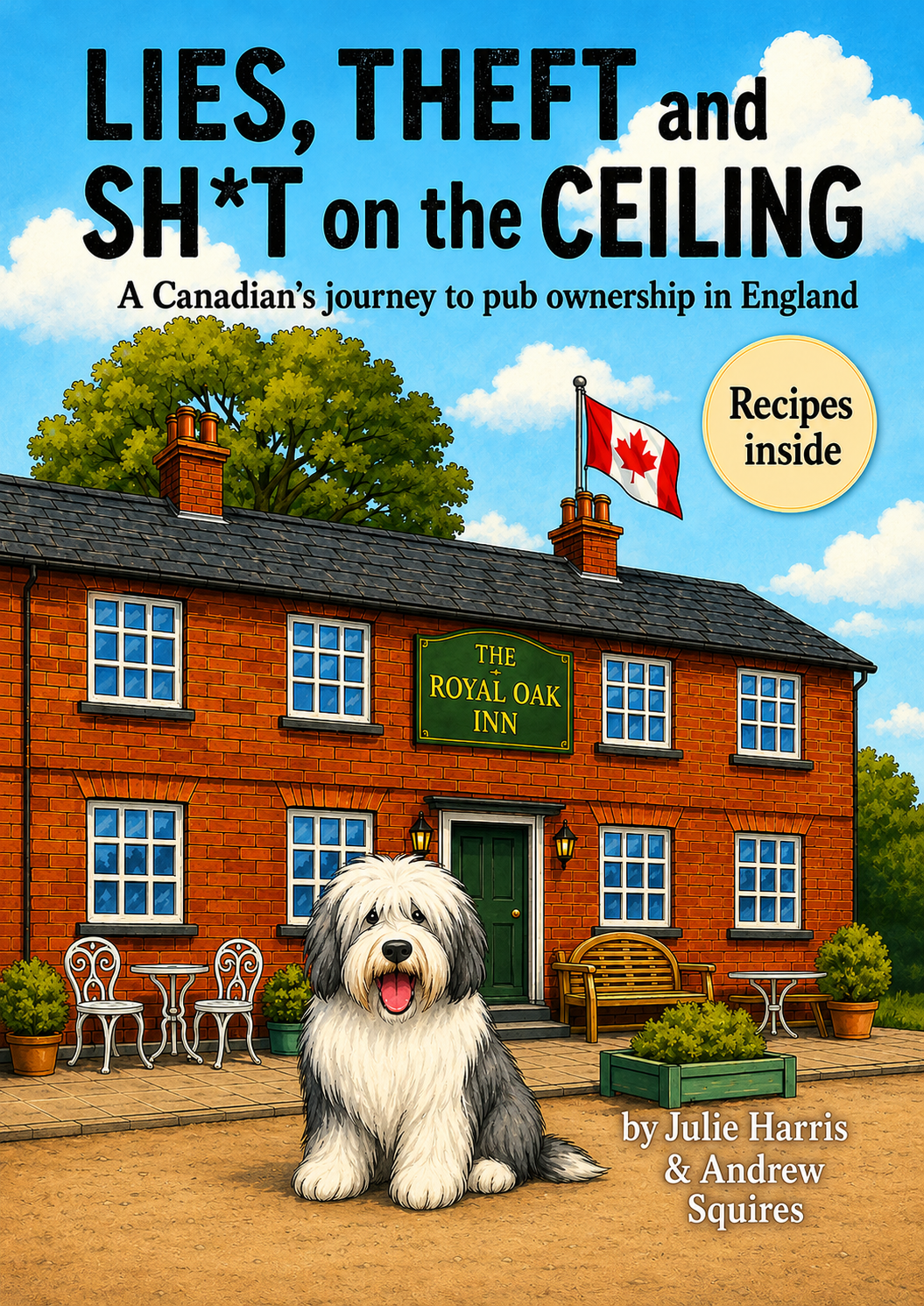
Lies, theft and shit on the ceiling: A Canadian’s journey to pub ownership in England
Coming soon!
Unleash the foodie within
Indulge in the authenticity of homemade meals and the warmth of shared tales.
Crete, day three: Sweat, sand, and stuffed zucchini flowers
Some days you wake up on a Greek island and decide to walk straight into madness. A 1.5-hour hike from the quiet charm of Piskopiano Crete Greece to Stalis Beach, Crete doesn’t sound crazy — until you’re halfway there, uphill,…
Crete, day two: Sun, snails, and the sacred order of Beef Limonata
Some days, travel is about climbing mountains, dodging scooters, chasing museums. Other days, it’s about surrender. Total, unapologetic surrender to the fine art of doing absolutely nothing. Today was the latter. The pool at Amazones Village Suites**** is more than…
Crete, day one point two: Wine, ants, and the gospel according to Nikos
If paradise had a lobby, it would probably look something like the Amazones Village Suites**** in Piskopiano Crete Greece. Not the fake, polished, soulless kind of resort paradise — but the real deal. Perched up a hill with sea air…
Crete or Bust: A tale of delays, diverts, and damn good tomatoes
4am. Handcross. Dark. Quiet. The kind of quiet that hums in your ears and makes your thoughts louder than they should be. But there’s something romantic about starting a journey before the world wakes up — like you’re stealing a…
DAY 15-17: SEX-CRAZED MONKEYS, HOT SPRING FACEPLANTS & THE DEATH OF POLITENESS (ft. Shanghai Layover Madness)
There’s something beautifully deranged about ending your Japanese pilgrimage face-down in monkey crap. But let’s rewind. Final leg of the trip: Yamanouchi, home of the snow monkeys. These are not the polite, Zen-inspired creatures you’ve seen in travel brochures. These…
Facebook Posts
DAY ONE IN DALYAN: NEAR-DEATH LANDINGS, GIANT COCKS, AND THE HEALING POWER OF RAKI
There’s a very specific kind of arrogance that sets in when a flight is going well.
You’ve boarded without incident. No one has argued about overhead luggage. No one has removed their shoes and committed crimes against humanity. You’ve got a drink in hand and, in a moment of wildly misplaced optimism, you start a new TV series.
The Cleaning Lady.
Big mistake.
Because this show doesn’t politely entertain you—it grabs you by the throat and says, you’re watching me now. Before you know it, you’re emotionally invested in organised crime while cruising at 35,000 feet, wondering if you’ve ever made a single good decision in your life.
And then—because the universe enjoys a dramatic pivot—the landing into Dalyan begins.
Now, I don’t know who Dalyan offended, but the wind there has a personal vendetta. The plane starts doing that aggressive side-to-side shimmy—the kind where everyone suddenly becomes very quiet and very religious.
You don’t panic. You just… mentally prepare. You think about your loved ones. You think about your will. You think about whether you should’ve ordered that second wine.
But we land. Of course we do. Slightly humbled. Mildly traumatised. Alive.
And then—out of nowhere—we’re escorted into a limousine.
A limousine.
Not a tired shuttle bus with a sticky floor. Not a taxi driven by a man who hates you. A full-blown, leather-seated, “have you accidentally become important?” limousine.
easyJet holidays, you absolute maniacs. What is this behaviour? Love you!
We roll into the Dalyan Live Spa Hotel under the cover of darkness, having just missed what can only be described as an apocalyptic storm.
Lovely.
Until you get into the room and realise it’s colder than a landlord’s heart.
No blankets. No backup. Just you and your partner staring at each other like, well… I guess this is happening.
Romance? No.
This is thermal survival.
Morning arrives, and with it, hope. Hope in the form of a hot shower—the universal symbol of “things are going to be okay.”
Instead, you are assaulted by water so cold it feels like the pipes are actively punishing you for your life choices.
It’s not refreshing. It’s character-building. And frankly, I’ve got enough character.
Now—credit where it’s due—the hotel team, who had literally opened the day before, launched into action like a slightly disorganised but deeply committed emergency response unit. Phones ringing. People nodding. Someone probably Googling plumbing.
You couldn’t fault them. They cared. They tried. They rallied. Not their fault… and they are doing their absolute best to sort everything out. Best customer service ever!
Hot water? Pending. Faith? Intact.
We head into Dalyan town, and within minutes, one thing becomes abundantly clear:
This is not your town.
This is the animals’ town.
Cats everywhere—confident, slightly judgmental, clearly in charge. Dogs roaming like retired generals. And then… the roosters.
Let’s address the elephant in the room.
Turkey has the biggest cocks I have ever seen.
Absolutely enormous. Strutting around like they pay council tax. You don’t laugh—you observe in respectful silence and carry on with your day, slightly changed.
And yet, despite the chaos, there’s a strange calm to it all. Nobody’s rushing. Nobody’s stressed. It’s like the entire town collectively decided to relax and just never stopped.
We find a karaoke bar—because clearly we make excellent life decisions—and there it is:
A pina colada so good it makes you forgive the morning’s attempted hypothermia.
Cold, creamy, slightly dangerous. The kind of drink that whispers, you’re on holiday now, behave accordingly.
Across the river, the ancient rock tombs stare down like disapproving ancestors. Thousands of years of history looking at you, drink in hand, wondering where it all went wrong.
The weather plays along—sun, cloud, just enough warmth to feel smug, not enough to sweat like a sinner in church.
Back to the hotel for a “quick nap,” which is code for collapsing like you’ve just completed military training.
Then the hotel bar.
And this is where things properly unravel.
A couple of double raki later—and suddenly you’re in a full-blown political discussion with bartenders who are sharper, funnier, and more insightful than most people you’ve met in actual meetings.
No fluff. No nonsense. Just smart conversation and strong drinks.
Raki doesn’t just warm you—it convinces you that you’re interesting.
Dinner at Sahil.
And finally—validation.
Meze for two arrives, which is optimistic at best. Hummus, smoky eggplant, Russian salad, cacik, fresh veg—each dish quietly reminding you that you’ve been eating like an idiot back home.
Then calamari.
Perfect. Tender. Crisp. Paired with a thick onion-cheese situation that sounds wrong but tastes like a revelation.
Mains land.
Adana kebab—spiced just enough to wake you up without ruining your evening.
And a grilled sea bass so perfectly seasoned it doesn’t even bother with the lemon sauce it was promised. It doesn’t need it. It knows its worth.
We walk back.
And the sky absolutely loses its mind.
Not rain—biblical rain. The kind that soaks you instantly and leaves you laughing because resistance is pointless.
Back to the hotel. Drenched. Slightly drunk. Entirely satisfied.
Naturally, another raki.
Because at this point, you’re not making decisions—you’re honouring a tradition.
Day one in Dalyan:
Near-death landing. Luxury limousine. Cold showers. Giant cocks. Exceptional food. Smarter bartenders than most executives.
And just enough chaos to remind you you’re alive.
Perfect.
… See MoreSee Less
Right. Let’s address the elephant in the room.
I’ve been missing.
Not dead—despite what a few of you probably assumed after the radio silence—but buried. Properly buried. Up to my neck in notes, grease stains, half-drunk glasses of red, and the kind of late-night, slightly unhinged storytelling that only makes sense somewhere between midnight and regret.
Because, and here’s the bit that sounds suspiciously like a respectable excuse—I’ve been writing a book.
An actual, honest-to-God book. The kind with pages and chapters and the looming threat of someone, somewhere, judging your comma placement like it’s a moral failing. It’s due out this summer, assuming I don’t throw the manuscript into a fire and walk away dramatically at the eleventh hour.
Writing a book, it turns out, is a lot like running a kitchen during a Sunday lunch rush. Chaotic. Sweaty. Occasionally brilliant. Frequently held together by caffeine, stubbornness, and a low-level sense of impending collapse.
There were days I forgot what daylight looked like. Days where meals consisted entirely of “whatever’s within arm’s reach and not actively moving.” Days where I became convinced that this was either the best idea I’ve ever had… or a catastrophic misjudgment that would haunt me forever.
So yes. I disappeared.
Not because I lost interest. Not because I ran out of stories. But because I was knee-deep in creating something bigger, messier, and far more dangerous: a collection of stories that probably shouldn’t be told… but absolutely will be.
And now—mercifully, gloriously—I’m coming up for air.
Which means we’re back.
And not quietly, either.
Because this Friday, I’m off again.
This time to Dalyan.
Now, if your frame of reference for Turkey is the all-inclusive chaos of Marmaris—sunburnt Brits, neon cocktails, and the faint smell of regret baked into plastic sun loungers—then Dalyan is its cooler, slightly aloof cousin who reads books and doesn’t shout.
It’s quieter. Lower key. The kind of place that doesn’t need to scream for your attention because it knows exactly what it is.
We’re talking winding rivers lined with reeds. Ancient Lycian tombs carved into cliffs like someone casually decided to build a mausoleum mid-mountain. Turtle beaches. Mud baths that promise rejuvenation and deliver something closer to organised chaos with a side of sulphur.
And I’m going pre-season.
Spring.
Which means fewer crowds, cooler air, and that brief, magical window where everything is just starting to wake up—flowers pushing through, markets finding their rhythm, locals not yet exhausted by the annual invasion of flip-flops and bad decisions.
Ten days.
Ten days of eating things I can’t pronounce, drinking things I probably shouldn’t, and getting myself into situations that will, without question, become stories.
Some of them questionable. All of them honest.
So consider this your warning.
Or your invitation.
Or both.
I’ll be starting Friday. Ten days. No filters, no sanitised travel brochure nonsense—just the good stuff: food, people, chaos, and whatever else inevitably goes sideways.
Stay tuned. We’re back!
It’s about to get interesting again.
… See MoreSee Less
Happy New Year, you beautiful degenerates.
May the coming year be soaked in good booze, bad decisions, questionable street food, late nights, earlier mornings than planned, and stories you’ll swear never happened—but absolutely did.
Eat the thing you’re told not to.
Order another round.
Talk to strangers.
Burn something slightly.
Laugh too loud.
Here’s to a year of flavour over fear, joy over judgement, and debauchery done with purpose.
See you at the bar. 🥂
… See MoreSee Less
STOP EATING YOUR OWN: A NOTE FROM THE BACK OF THE KITCHEN
There’s a moment in every failing kitchen when the knives stop being used on food and start getting tested on each other.
You see it in the eyes first. The sideways glances. The whispered bitching. The sudden urge for everyone to be head chef despite barely being able to run the pass. The enemy isn’t the burnt steak anymore—it’s the guy standing next to you holding the tongs.
That’s where the British Right is right now.
And it’s ugly.
Somewhere along the way, the conversation stopped being about ideas, outcomes, or the people who actually live with the consequences of policy. Instead, it turned into a circular firing squad—accusations of dictatorship, purity tests, ego-driven walkouts, and shiny new “movements” that look suspiciously like the old ones, just with different letterheads and louder voices.
Let’s be clear: calling your own side “dictators” doesn’t make you principled. It makes you reckless. And lazy. It hands ammunition to people who didn’t earn it and don’t deserve it.
This isn’t how you win anything.
I’ve worked in enough kitchens, watched enough revolutions—culinary and otherwise—to know how this ends if no one grows the hell up. You fracture. You splinter. You lose. And the people you claim to hate most inherit the keys while you’re still arguing over whose name goes on the menu.
The emergence of breakaway parties, independents rebranding themselves as saviours while carrying the same manifesto in a slightly different font, isn’t brave. It’s not bold. It’s not even new. It’s vanity masquerading as conviction.
And yes—these splinter groups are gaining ground. That should terrify you, not excite you.
Because public opinion is not loyalty. It’s weather. It changes fast, violently, and without apology. One bad headline, one stupid soundbite, one poorly timed ego-trip, and the wind shifts. Always has. Always will.
Reform—or whatever name you want to hang on the main mast—has a strong hold right now. That’s not a moral victory. That’s a moment in time. And moments get squandered when too many people insist on being the loudest voice in the room instead of the last one standing.
Here’s the part no one likes to hear: Labour is not being beaten by brilliance on the Right. Labour is being saved by stupidity on it.
While you’re busy fighting over leadership, tone, and who gets to sit at the head of the table, the opposition doesn’t have to do a damn thing. They just wait. They watch. They let you bleed out on the kitchen floor.
This isn’t about personalities. It’s not about who’s more “authentic” or who shouts the hardest into a microphone. It’s about outcomes. Power. Direction. Whether you actually want to govern—or just be right on Twitter.
Egos need to be checked. Public spats need to stop. The performative outrage needs to be dialled down before it consumes the entire operation. You don’t win by humiliating your allies. You don’t build trust by lighting matches in a room full of gas.
Unity doesn’t mean obedience. It means recognising the real enemy and refusing to do their work for them.
So here’s the blunt truth from the back of the kitchen, where the food is ugly but honest:
If the Right keeps tearing itself apart, Labour doesn’t need to defeat you. You’ll do it yourselves—efficiently, publicly, and with the kind of self-righteous confidence usually reserved for people who never see the bill until it arrives.
Put the knives down.
Face the right direction.
And decide—once and for all—whether you’re here to win, or just to be heard while everything burns.
Nigel Farage
Nigel Farage: Supporters' Group
Rupert Lowe Rupert Lowe, saying, what you are thinking!
Ben Habib (Advance U.K.) for PM U.K. Ben Habib & Advance UK Party Supporters Group.
… See MoreSee Less
What was the point? A Remembrance Day nobody wants to talk about.
Every year, we stand in the cold, poppies pinned to our coats, heads bowed in silence. We tell ourselves we are remembering. Remembering courage. Remembering sacrifice. Remembering a generation of men and women who walked towards gunfire so that we could live freely.
And yet — look around.
We have sleepwalked into a world where the freedoms they fought for are being bartered away like two-for-one toilet roll in the discount aisle. Digital IDs. Biometric passes. “Show me your QR code, citizen.” Systems being slipped quietly into place under the polite, reassuring language of “convenience,” “safety,” and “modernisation.”
As if a free society should ever need permission to exist.
Recently, a 100-year-old World War II veteran was interviewed. A man who landed on foreign soil under fire. A man who lost friends beside him. A man who did not know he would ever make it home.
He looked into the camera and said, “I sometimes wonder why I bothered.”
Not because he regretted his service.
But because he struggles to recognise the country he fought for.
A country where the government now talks openly about digital identity frameworks.
Where banks decide whether you may or may not access your own money.
Where dissent is labelled dangerous.
Where compliance is rewarded.
Where the foundations of a social credit system — the very thing we shook our heads at in China and said “that could never happen here” — are being welded into the architecture of everyday life.
All while we nod.
All while we scroll.
All while we do as we’re told.
Let me be clear: freedom does not disappear overnight.
It erodes.
One “temporary measure” at a time.
The people pushing digital ID will tell you:
• It’s just to make things easier.
• To prove who you are.
• To access services seamlessly.
• To keep you safe.
But when the same credential that proves who you are can also determine:
what you’re allowed to do,
who you’re allowed to see,
what you’re allowed to buy,
and whether you get to participate in society —
you no longer live in a free country.
You live in a permissioned one.
And permission can be revoked.
The men who fought in World War II were not polished saints from history textbooks. They were human. They argued, swore, bled, panicked, hoped, and fought anyway.
But what united them was a belief — not in perfection — but in freedom.
The right to speak.
The right to move.
The right to live without surveillance.
The right to stand up and say “No.”
So tell me — honestly — what would those men think of us now?
Of a public trained to fear disapproval.
Of a population that apologises before it speaks.
Of citizens so grateful to be managed that they forget how to demand better.
On Remembrance Day, the silence feels heavier now.
Not just for those who died —
but for the freedoms that are dying.
We have not been defeated by invaders.
We have been softened by mismanagement, sedated by convenience, and ruled by people who believe themselves entitled to control.
And yes — we should be ashamed.
Ashamed that a 100-year-old veteran looks at us and questions whether his sacrifice still means anything.
But shame can be useful — if it wakes us.
If it reminds us that freedom is not ceremonial.
Not symbolic.
Not something to honour once a year in silence and forget by lunchtime.
Freedom must be lived.
Or it dies.
This Remembrance Day, don’t just remember the past.
Defend the present.
Because the people who fought for our freedom —
should not live to see us surrender it.
… See MoreSee Less