The Vendée is what happens when France forgets to market itself properly. Thank Christ for that.
No influencers hanging off yachts. No rooftop bars serving cocktails with smoke pouring out of them like a GCSE chemistry experiment. No beach clubs named things like Azure where men with veneered teeth explain the concept of “elevated dining.”
The Vendée does not care about elevated dining.
The Vendée cares about tides, butter, oysters, and mogettes.
It sits out there on France’s Atlantic coast, stubborn and slightly weather-beaten, like an old fisherman who still thinks mobile phones are vaguely suspicious.
I arrived with two Old English Sheepdogs, which in France turns out to be less “pet ownership” and more “travelling circus.” Every village became a full-scale public event. Elderly French women gasped theatrically. Children pointed. Men smoking outside bars nodded respectfully like I’d arrived with two unusually hairy bears.
One fisherman near Saint-Gilles-Croix-de-Vie looked at the dogs, looked at me, shrugged and said:
“Magnifique. Mais beaucoup trop de poils.”
A fair assessment.
The first thing you need to understand about the Vendée is this. The French take lunch seriously everywhere. But here they treat it like a sacred constitutional right.
Do not, under any circumstances, plan to eat between 1:30 p.m. and 7 p.m.
You will lose.
The kitchens close. The chairs go up. Humanity temporarily ceases. Entire towns appear to shut down with the efficiency of a submarine hatch sealing before impact.
At around 2 p.m. on my second day, I wandered optimistically into a seaside restaurant asking if food was still available.
The waitress looked at me with the sort of pity normally reserved for people who eat soup with forks.
“Non.”
I glanced at several customers still actively eating.
“Just fries maybe?”
“Non.”
“Bread?”
“Non.”
The dogs received more sympathy than I did.
I eventually found a baguette, some cheese and a tin of sardines from a tiny grocery shop run by a woman who looked like she’d survived several wars and at least one murder investigation.
Now, this is another thing France does unfairly well. Tinned food.
In Britain, canned fish feels like punishment. Something eaten reluctantly over a sink during financial hardship. In France, somebody’s grandmother has lovingly preserved tiny silver sardines in olive oil, herbs and what appears to be actual wizardry. The tin itself looks like it belongs in a museum gift shop.
I ate them with bread beside the harbour while the dogs attempted to emotionally blackmail passing tourists for snacks. Honestly, it was one of the best lunches I had all trip.
That’s the thing about the Vendée. It doesn’t perform Frenchness for tourists. It simply continues being French while you either adapt or slowly perish beside a closed crêperie.
The coastline itself feels oddly untouched. Huge beaches stretch for miles under enormous Atlantic skies. Not manicured beauty. Real beauty. Windswept and slightly chaotic. Sand dunes covered in stubborn grass. Pine forests bending sideways from years of coastal wind. Long beaches where families still bring folding chairs, boiled eggs and enough cold sausage to survive a small military siege.
And the light out there. Jesus Christ.
By evening the entire coast glows gold like an old postcard somebody left in the sun too long.
The seaside towns are gloriously scruffy in places. Harbours full of chipped paint and rusting boats. Tiny bars with handwritten menus. Ice cream kiosks staffed by teenagers who move with the urgency of sedated sloths.
I loved every second of it.
One afternoon I stopped at an oyster shack where the floor was permanently wet and nobody seemed remotely concerned about health and safety regulations. A giant dog slept under my table while fishermen stomped around in rubber boots drinking cold white wine at noon like it was isotonic sports recovery fluid.
Nearby, two old men argued passionately over tides.
Not politics.
Not football.
Tides.
One kept drawing invisible diagrams in the air with an unlit cigarette while the other stared out at the sea with deep disappointment, as if the Atlantic itself had personally let him down.
The oysters arrived looking prehistoric. Cold, salty and tasting exactly like the sea smells at low tide. I ate them with thick bread, butter and a bottle of Muscadet so cold it hurt my teeth.
And then there were mogettes.
Now, if you are not from the Vendée, you may look at mogettes and think:
“Oh good. Beans.”
This would be a catastrophic underestimation.
Vendéens talk about mogettes with the reverence normally reserved for religion, war heroes or grandmother’s jewellery. These soft white beans appear beside everything. Ham. Sausages. Duck. Sometimes just sitting there proudly on their own in a pool of butter daring you not to love them.
At one restaurant, an elderly woman looked genuinely offended when I asked what made them special.
“What makes them special?” she repeated, horrified.
Then she explained mogettes for nearly fifteen straight minutes while I nodded respectfully and consumed enough butter to lubricate industrial machinery.
Honestly, she was right.
Nobody rushed me. Nobody hovered with the bill. I was there nearly two hours.
In Britain, restaurants begin emotionally evicting you about fourteen minutes after your main course arrives.
In the Vendée, they practically expect you to enter a minor state of hibernation between courses.
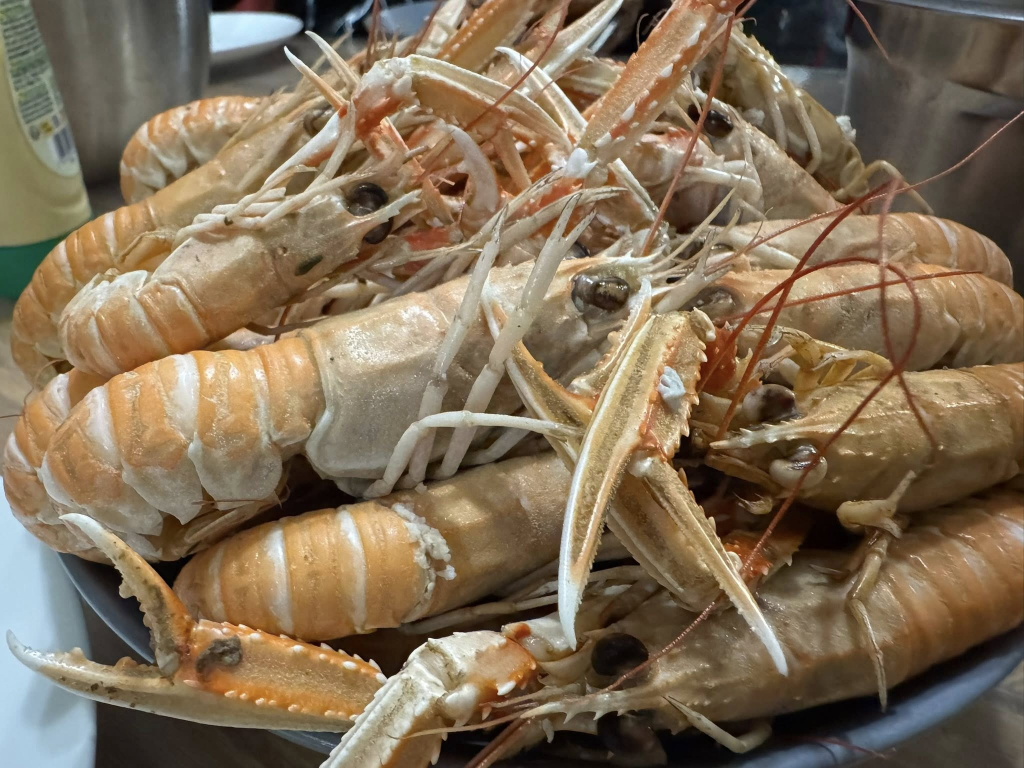
The food everywhere is absurdly good in that deeply unfair French way. Tiny roadside bakeries casually producing butter so rich it feels medically irresponsible. Sardines grilled metres from the harbour where they were caught. Moules frites arriving in enormous steaming pots beside mountains of fries.
And wine. Cheap, cold, wonderful wine.
The kind that makes you start seriously considering whether your entire life back home might actually be unnecessary.
Evenings in the Vendée move slowly. People stroll. They sit for hours outside cafés. Elderly couples dance badly but enthusiastically at outdoor concerts. Children chase each other through town squares while exhausted parents drink wine with the hollow-eyed relief of people surviving summer holidays.
And then there’s the Atlantic itself. Loud. Restless. Violent some days.
This isn’t the Mediterranean. The sea here has moods.
You feel it at night lying in bed with the windows open while the wind batters the coast and somewhere nearby a flagpole clangs rhythmically against metal.
It feels old here.
Not frozen in time exactly. Just uninterested in chasing whatever nonsense the modern world is currently selling.
The Vendée doesn’t need reinvention.
It already knows exactly what it is.